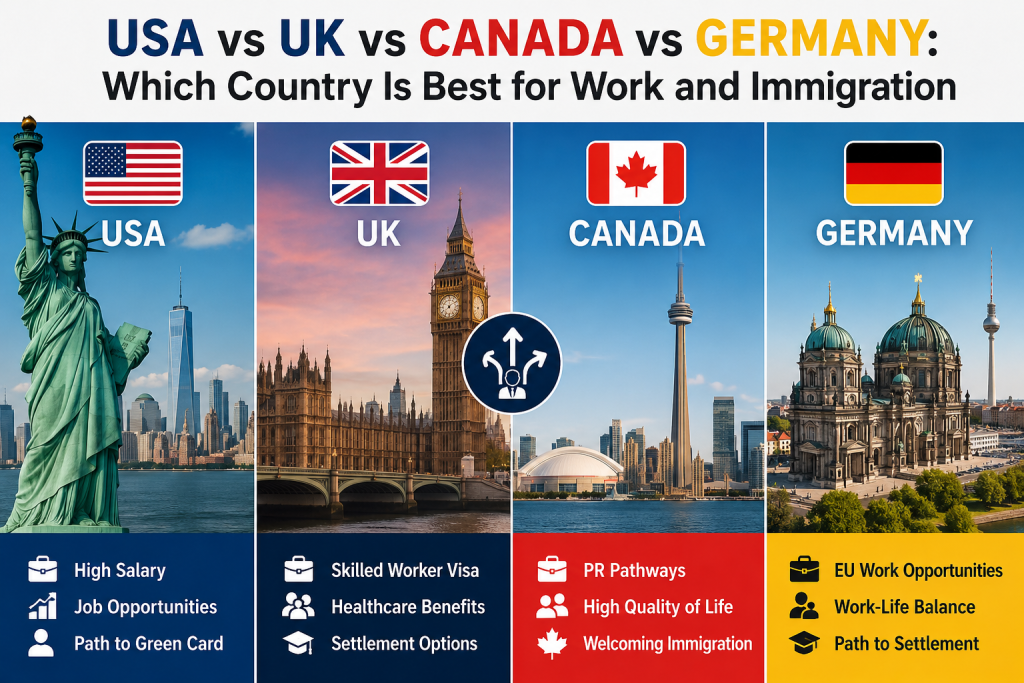
Canada continues to attract skilled foreign workers because of its strong economy, diverse workforce and demand for qualified professionals. In 2026, international applicants may find opportunities in industries such as healthcare, engineering, technology, construction, transportation and skilled trades.
Some experienced professionals can earn CAD $100,000 or more annually, depending on their occupation, qualifications, province and employer. However, visa sponsorship and a $100,000 salary are not guaranteed. Applicants must meet the job requirements and qualify for the appropriate Canadian work permit.
What Is Visa Sponsorship in Canada?
Visa sponsorship generally means that a Canadian employer is willing to hire a foreign worker and provide the employment documents needed for a work permit application.
For many employer-specific work permits, the employer may need to obtain a Labour Market Impact Assessment (LMIA). A positive LMIA shows that the employer could not find a suitable Canadian citizen or permanent resident for the position.
Some jobs are exempt from the LMIA requirement and may be filled through the International Mobility Program. Most foreign workers still need an approved work permit before they can legally begin working in Canada. Government of Canada guidance
Can You Earn $100,000 in Canada?
Yes, it is possible to earn CAD $100,000 annually, but this salary is normally associated with experienced professionals, managers and workers possessing specialized or highly demanded skills.
Your salary will depend on:
- Your occupation and years of experience
- Your education, licences and certifications
- The province or city where you work
- The employer and industry
- Whether the position is unionized
- Current labour-market demand
Under the Temporary Foreign Worker Program, employers generally must offer at least the prevailing wage for the occupation and location. Official wage information can be checked through Canada’s Job Bank. Government of Canada wage requirements
High-Paying Jobs That May Offer Visa Support
1. Software Developers and IT Specialists
Canada’s technology sector employs software engineers, cybersecurity specialists, cloud engineers, data scientists and artificial-intelligence professionals.
Experienced technology workers may earn between CAD $75,000 and over $130,000 annually, depending on their skills and location. Some eligible highly skilled workers may benefit from faster work-permit processing under the Global Skills Strategy.
2. Healthcare Professionals
Canada needs qualified healthcare workers in several provinces, particularly outside major cities. Opportunities may be available for:
- Registered nurses
- Physicians
- Pharmacists
- Medical laboratory technologists
- Physiotherapists
- Healthcare managers
Experienced nurses and specialized healthcare professionals may earn competitive salaries, while doctors and senior medical professionals can earn considerably more than CAD $100,000.
Healthcare is regulated in Canada. Foreign-trained applicants normally need to have their credentials assessed and obtain a provincial licence before practising.
3. Engineers
Civil, mechanical, electrical, petroleum and software engineers may find opportunities across Canada. Industries hiring engineers include construction, energy, manufacturing, transportation and technology.
Depending on experience and specialization, engineering salaries may range from approximately CAD $70,000 to over $120,000 annually. Applicants who want to use the professional title “engineer” may need registration with the appropriate provincial or territorial regulator.
4. Construction Managers and Project Managers
Canada’s construction industry requires professionals who can supervise residential, commercial and infrastructure projects.
Construction managers, estimators and experienced project managers may earn between CAD $80,000 and $130,000 annually. Employers usually look for candidates with relevant qualifications, project-management experience and knowledge of construction standards.
5. Skilled Tradespeople
Experienced workers in skilled trades may also earn high salaries, particularly when overtime and remote-site allowances are included. In-demand trades can include:
- Electricians
- Plumbers
- Welders
- Industrial mechanics
- Heavy-duty equipment technicians
- HVAC technicians
- Crane operators
Trade certification requirements vary by province. Some occupations require provincial certification or participation in Canada’s Red Seal Program.
6. Truck Drivers and Transportation Managers
Transport companies sometimes recruit foreign workers when qualified local candidates are unavailable. Long-haul truck drivers may receive competitive pay, although reaching CAD $100,000 usually depends on experience, routes, overtime and compensation structure.
Applicants must obtain the correct provincial commercial driving licence and satisfy medical and safety requirements.
7. Finance and Business Professionals
Accountants, financial analysts, auditors, business consultants and senior managers can earn high salaries in Canada. Professional designations, such as the Canadian CPA qualification, may be required for certain positions.
Senior finance professionals and managers can earn CAD $100,000 or more, especially in major business centres.
Basic Eligibility Requirements
Requirements vary by job and immigration program, but applicants commonly need:
- A valid passport
- A genuine job offer from a Canadian employer
- Relevant education or professional training
- Previous work experience
- Proof of English or French ability when required
- An LMIA or proof of an LMIA exemption, where applicable
- A clean criminal record
- A medical examination for certain jobs
- Proof that they meet the position’s licensing requirements
A job offer does not automatically guarantee a visa. Immigration, Refugees and Citizenship Canada makes the final decision on every work-permit application.
How to Apply for Visa-Sponsorship Jobs
Step 1: Prepare a Canadian-Style Résumé
Your résumé should normally be concise and focused on your accomplishments. Include your skills, work experience, qualifications and measurable results.
Avoid including unnecessary personal details such as your age, religion, marital status or photograph unless specifically requested for a legitimate reason.
Step 2: Check Whether Your Profession Is Regulated
Find out if your occupation requires a Canadian licence or certification. Healthcare, engineering and several skilled-trade occupations are regulated provincially.
You may need to complete a credential assessment, examination, bridging program or professional registration.
Step 3: Search for Genuine Vacancies
Applicants can search through:
- Canada’s Job Bank
- Provincial employment websites
- Company career pages
- Recognized Canadian recruitment agencies
Canada’s Job Bank provides information about vacancies, wages, employment prospects and educational requirements. Official job-search information
Use searches such as:
- “LMIA available jobs in Canada”
- “Foreign worker jobs in Canada”
- “Visa sponsorship software developer Canada”
- “Internationally trained nurse jobs Canada”
- “Construction jobs for foreign workers Canada”
Step 4: Confirm the Employer’s Support
If an employer wants to hire you, ask whether the position requires an LMIA or qualifies for an exemption. The employer may need to complete the relevant process before you can apply for your work permit.
Most employers need an LMIA unless the worker or position qualifies for a specific exemption. LMIA eligibility information
Step 5: Apply for Your Work Permit
Once you receive the required employment documents, you can apply for the appropriate work permit. An employer-specific work permit usually identifies:
- The employer you may work for
- The work location, where applicable
- How long you may work in Canada
- The conditions attached to your employment
Canada also offers open work permits in specific circumstances, but they are not available to every foreign applicant. Work-permit options
Is Canadian Visa Sponsorship Free?
Not completely. “Free visa sponsorship” is often used in job advertisements, but applicants should understand what it actually means.
An employer may pay required employer-side expenses or offer benefits such as airfare, accommodation or relocation assistance. However, workers may still have to pay for their work-permit application, biometrics, medical examination, police certificate, credential assessment or travel.
A legitimate employer should not sell you a job or demand that you pay the employer’s LMIA fee. Be suspicious of anyone promising a guaranteed Canadian visa or guaranteed CAD $100,000 job in exchange for money.
Warning Signs of a Job Scam
Avoid an offer if:
- The employer guarantees visa approval
- You are asked to pay for the job offer
- The salary is unusually high for an entry-level position
- The recruiter uses an unrelated personal email address
- There is no proper interview or screening
- The company has no verifiable website or Canadian presence
- You are pressured to send money immediately
- The offer letter contains spelling errors or inconsistent details
Verify the company independently and use only official Canadian government platforms when submitting an immigration application.
Conclusion
Canada offers promising opportunities for qualified foreign workers in 2026. Professionals in technology, healthcare, engineering, construction, transportation, finance and skilled trades may earn attractive salaries, with some experienced workers receiving CAD $100,000 or more annually.
Success requires relevant skills, a genuine employer, the correct work permit and careful preparation. Research each opportunity, confirm the immigration requirements and never pay anyone for a guaranteed job or visa.